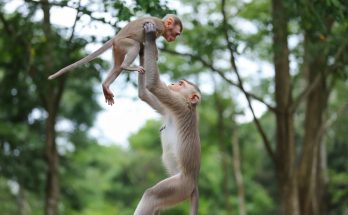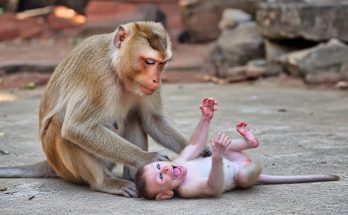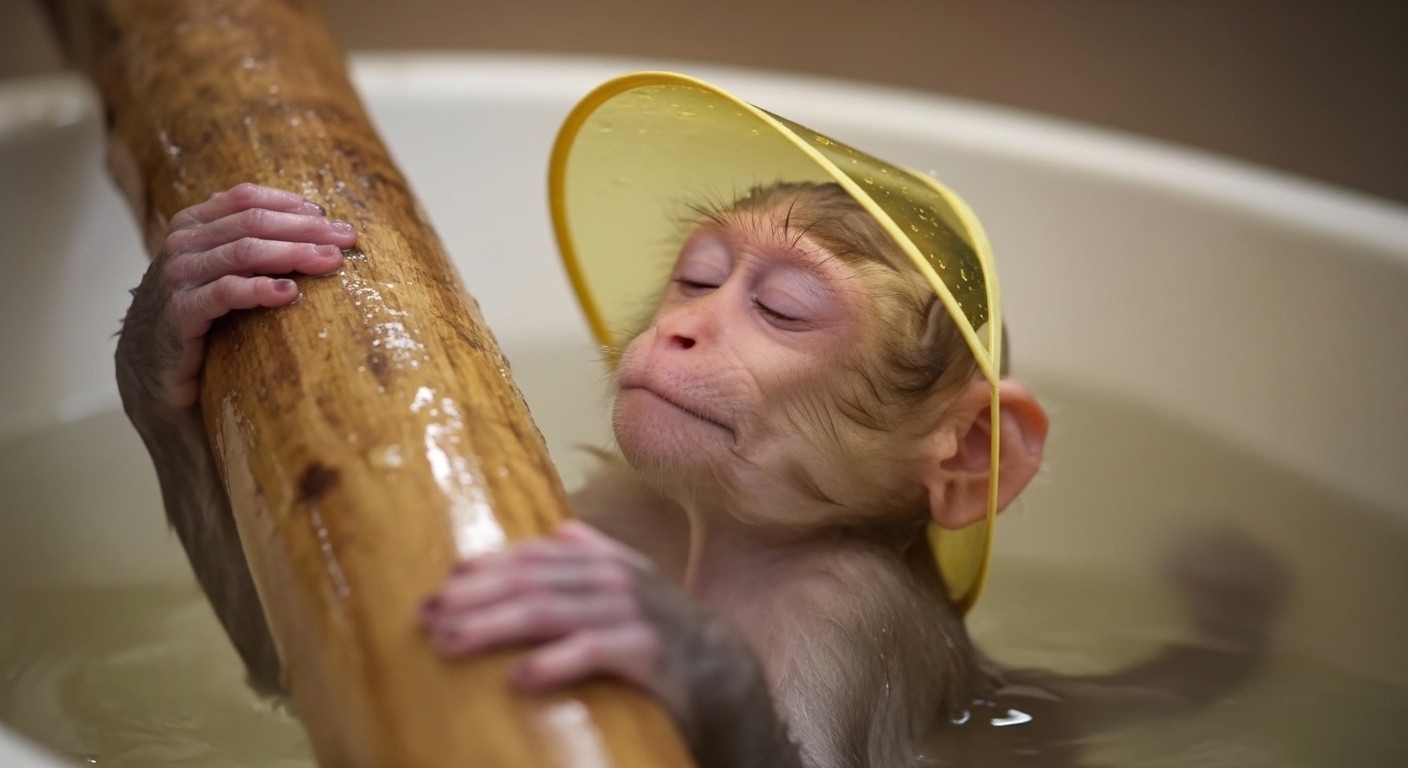

When people see a baby monkey crying alone, the first thought is always the same:
Why did mom leave the baby?
It looks cruel. It feels wrong. It breaks the heart. 💔
But in the wild, the reason is often deeper, harder, and more painful than it appears.
Sometimes, the mother is completely exhausted.
A mother monkey must survive every day. She searches for food, watches for danger, fights stress, and protects herself. If she is starving, injured, or extremely weak, her body may no longer be able to care for another life. Carrying, feeding, and protecting a baby takes enormous energy. When her strength is gone, instinct may force her to leave, even though it hurts.
Sometimes, fear makes her leave.
If predators are nearby, if humans are too close, or if the environment suddenly becomes dangerous, a mother may panic. In that fear, she might run or climb quickly, accidentally leaving her baby behind—or intentionally creating distance to protect herself. To her, danger means death. Fear can silence love.
Sometimes, the mother is stressed or overwhelmed.
Noise, conflict with other monkeys, lack of food, or constant threats can make a mother anxious and aggressive. Stress can change behavior. She may push the baby away, ignore its cries, or walk off because her mind is overloaded. This is not because she hates her baby—it is because she cannot cope anymore.
Sometimes, the baby is sick or very weak.
This is the hardest truth to accept.
In nature, a mother may sense that her baby is unlikely to survive. Caring for a weak baby requires extra food, extra protection, extra energy. If she chooses to continue, she may risk her own life. Instinct may force her to abandon the baby to save herself and possibly have another chance in the future. To humans, this feels unforgivable. To nature, it is survival.
Sometimes, the mother is very young or inexperienced.
A first-time mother may not understand her baby’s needs. She may misread cries, feel annoyed, or become confused. She might wander away without realizing the danger she puts her baby in. This is not lack of love—it is lack of knowledge.
Sometimes, there is no milk.
If the mother cannot produce enough milk, feeding becomes painful and stressful. The baby cries more from hunger. The mother becomes frustrated. Over time, she may avoid the baby because she feels unable to help. The crying becomes a reminder of her failure.
And sometimes… she does come back.
This is something many people don’t see.
Some mothers leave their babies temporarily to find food or check safety. They may watch from a distance. They may return later when it feels safe. But during that waiting time, the baby cries—and it looks like abandonment, even if it is not permanent.
But what about the baby?
The baby does not understand any of this.
He does not know about exhaustion, fear, instinct, or survival.
He only knows:
-
“I am hungry”
-
“I am scared”
-
“Mom is gone”
To the baby, being left feels like the end of the world. Crying is his only language. Waiting is his only option. That is why the scene feels so pitiful and painful to watch.
So when we ask, “Why mom left baby?”
The answer is not one simple thing.
It can be:
-
Hunger
-
Fear
-
Weakness
-
Stress
-
Instinct
-
Or a temporary choice for survival
Nature is not gentle. It does not explain itself. It does not comfort the weak.
And in that silence, a tiny baby waits—confused, afraid, and deserving of care—making the moment heartbreaking for anyone who has a heart. 🐒💔