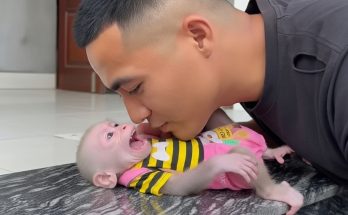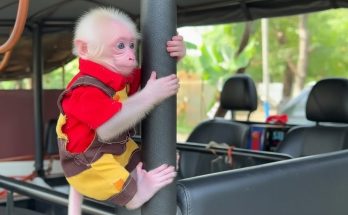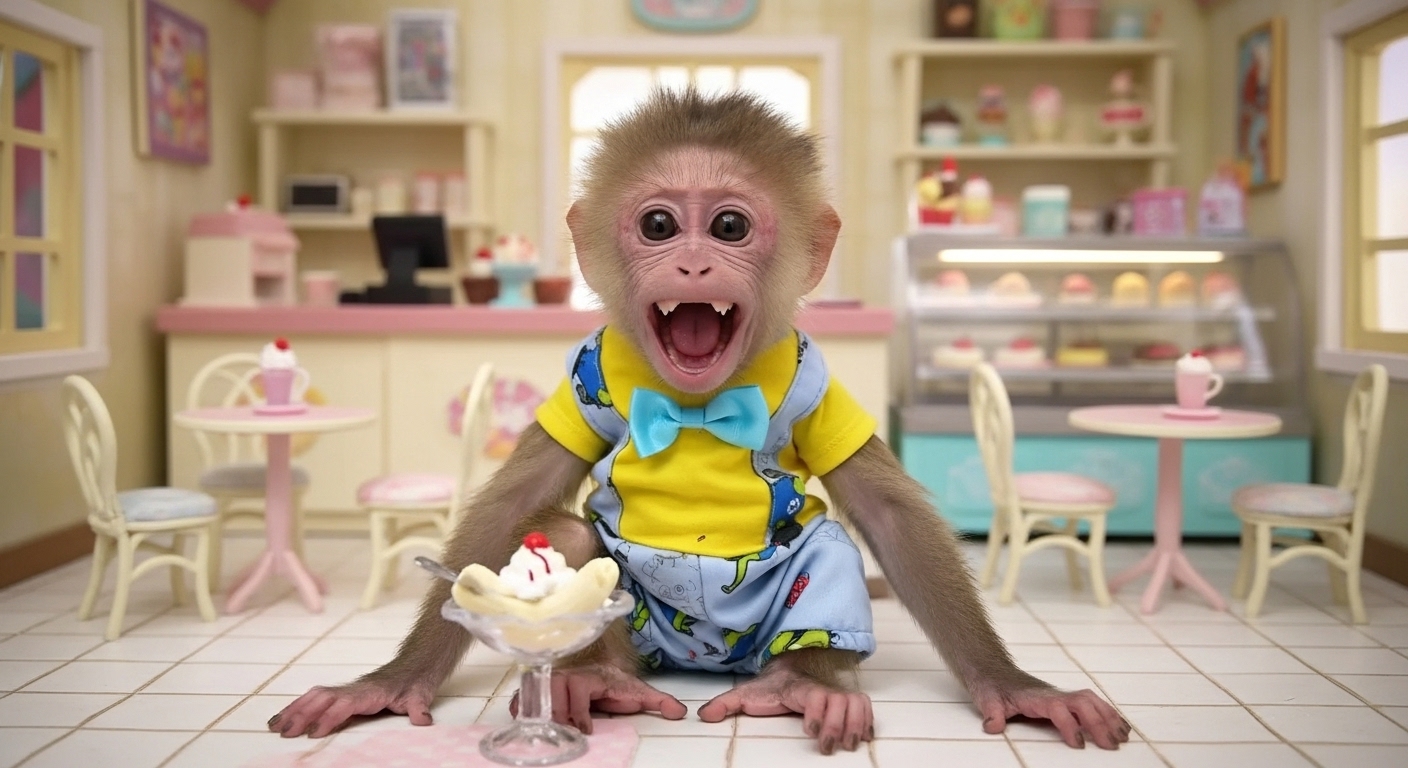

he scream came suddenly—sharp, loud, and full of fear.
The baby’s small body stiffened as if the world had turned dangerous in one instant. His eyes opened wide, shining with panic, and his mouth opened in a cry that carried everything he couldn’t explain. He wasn’t screaming to be loud. He was screaming because he was scared.
Something had startled him.
Maybe it was a sudden noise. Maybe a shadow moved too fast. Maybe he had woken up and didn’t feel familiar arms around him right away. For a baby, fear doesn’t need a big reason. When safety disappears even for a second, fear rushes in like a storm.
His tiny hands shook as they reached out, grabbing at the air. His legs kicked weakly, not trying to escape—trying to find comfort. Tears filled his eyes, spilling down his cheeks as his scream broke into desperate sobs. Each breath came fast and uneven.
He felt alone.
The world felt too big.
The caregiver heard the scream immediately.
There was no hesitation. No delay. Strong, gentle arms lifted the baby and pulled him close. The moment his body touched warmth, the scream changed. It didn’t stop right away—but it softened, turning from panic into crying. That change mattered. It meant he recognized safety again.
The caregiver held him firmly, one hand supporting his head, the other pressing him against a steady chest. A heartbeat filled the baby’s ears—slow, calm, real. The caregiver rocked gently, not fast, not rough. Just enough to say you’re here, you’re safe.
The baby still cried.
Fear doesn’t disappear instantly.
His face was red, wet with tears. His mouth trembled as he tried to catch his breath. He buried his face into warmth, clinging tightly with both hands. His grip was strong for such a small body—fear gives babies strength when they have none left.
Soft sounds came from above. Low, calm, repeated. The caregiver’s voice wasn’t loud. It didn’t need to be. Calm is contagious when held close enough.
Slowly, the baby’s breathing began to change.
The sharp gasps turned into uneven breaths.
The uneven breaths turned into quiet sobs.
The sobs turned into little hiccups.
His body was still tense, but it was loosening.
The caregiver stayed still, patient, knowing this moment couldn’t be rushed. Fear needs time to melt away. One hand rubbed the baby’s back in slow circles. Another gently wiped tears from his face. No scolding. No confusion. Just presence.
The baby opened his eyes slightly.
He looked up, checking the face above him. His eyes were still wet, still scared—but when he saw familiar eyes looking back, something shifted. His grip loosened just a little. Trust began to return.
Another quiet sound escaped his mouth—not a scream, not a cry. Just a tired, shaky breath.
Exhaustion followed fear, as it often does.
His eyelids drooped. His head rested heavily against the caregiver’s chest. His body was still shaking faintly, but it was no longer fighting. He was letting himself be held.
Safe again.
The caregiver didn’t move. Didn’t put him down. Didn’t break the moment. Because after fear, babies need certainty. They need to know that safety will stay.
Minutes passed.
The baby’s breathing became slow and deep. His fingers relaxed. His face softened. The storm inside him had passed. What remained was tiredness—and relief.
He had screamed because he was afraid.
But he calmed because someone came.
Because someone stayed.
Because someone cared.
In the quiet that followed, the baby slept—still close, still held. And even in sleep, one small hand rested against warmth, making sure fear would not return.
Screaming, so afraid.
But never alone. 🐒💛